
Which Way Do Clouds Move
Which Way Do Clouds Move - In general, clouds move at a speed and direction of the prevailing wind at the altitude where the clouds are occurring. Iirc, the wind going a. They do not just appear to move because of the spinning of the earth. The direction and speed of the wind depends on the pressure. A big misconception a lot of people have is that when you see clouds move, they’re not actually moving. Cloud speed varies depending on weather, altitude, the type of cloud and other.
Clouds don't move in the opposite direction of the wind. A big misconception a lot of people have is that when you see clouds move, they’re not actually moving. The direction and speed of the wind depends on the pressure. The direction and speed of the wind depends on the. Clouds move along with the wind, so what you’re seeing is the wind changing direction with height.

How Fast Do Clouds Move? Nayturr
While the earth’s spinning does have an effect, you’re not seeing. They move in the direction of the winds higher up in the atmosphere, which might be slightly different from what you feel on ground. The direction and speed of the wind depends on the pressure. Clouds move in response to the local winds. They do not just appear to.

How Fast Do Clouds Move? Malevus
By convention, the direction of movement of a cloud is the direction from which the cloud moves. Cloud movement depends on wind speed, altitude, and the type of cloud. They are formed by the movement of air masses and are influenced by various factors such as wind patterns,. While the earth’s spinning does have an effect, you’re not seeing. High.

How Fast Do Clouds Move? Malevus
In general, clouds move at a speed and direction of the prevailing wind at the altitude where the clouds are occurring. In general, clouds move at a speed and direction of the prevailing wind at the altitude where the clouds are occurring. By convention, the direction of movement of a cloud is the direction from which the cloud moves. A.

Do Clouds Move or Do We Move? (Learn Here!)
They move in the direction of the winds higher up in the atmosphere, which might be slightly different from what you feel on ground. Clouds move anywhere from 30 to 40 mph in a thunderstorm to over 100 mph when caught in a jet stream. They are formed by the movement of air masses and are influenced by various factors.
Do Clouds Move or Do We Move? (Learn Here!)
Different types of clouds move at varying speeds and altitudes, creating patterns and formations as they flow. Cloud movement depends on wind speed, altitude, and the type of cloud. Although the air immediately around you may be still, the winds are far stronger thousands of metres higher up. By convention, the direction of movement of a cloud is the direction.
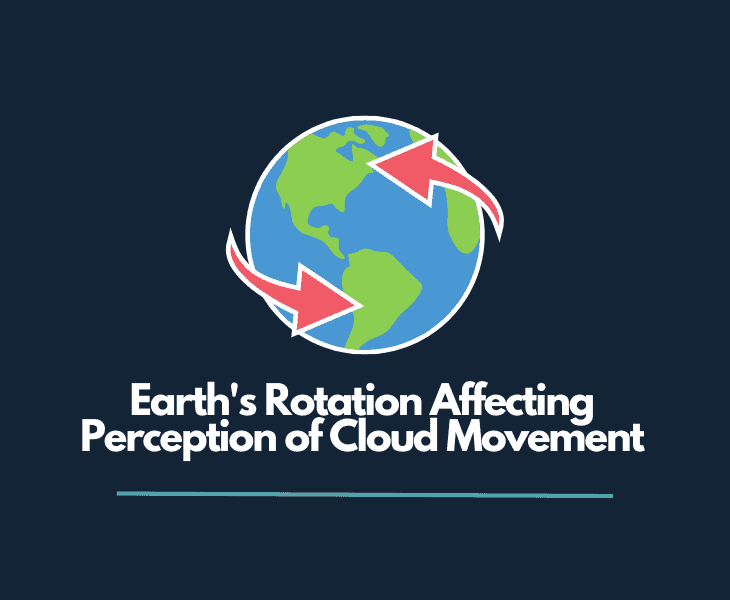
Which Way Do Clouds Move - The range of ways in which clouds can be formed and the variable nature of the atmosphere results in an enormous variety of shapes, sizes and textures of clouds. I guess the short answer is: They do not just appear to move because of the spinning of the earth. Rather, it’s supposed to be the earth spinning around and what we actually see is the sky spinning around the clouds, not the other way around. They are formed by the movement of air masses and are influenced by various factors such as wind patterns,. The direction and speed of the wind depends on the pressure.
Clouds move along with the wind, so what you’re seeing is the wind changing direction with height. Clouds move anywhere from 30 to 40 mph in a thunderstorm to over 100 mph when caught in a jet stream. Different types of clouds move at varying speeds and altitudes, creating patterns and formations as they flow. Rather, it’s supposed to be the earth spinning around and what we actually see is the sky spinning around the clouds, not the other way around. In general, clouds move at a speed and direction of the prevailing wind at the altitude where the clouds are occurring.
By Convention, The Direction Of Movement Of A Cloud Is The Direction From Which The Cloud Moves.
They move in the direction of the winds higher up in the atmosphere, which might be slightly different from what you feel on ground. Clouds move across the sky due to the wind's force and direction. The wind is moving in a different direction where the clouds are compared to where you are in your driveway. So that starts the whole thing moving and that’s where the wind comes from.
In General, Clouds Move At A Speed And Direction Of The Prevailing Wind At The Altitude Where The Clouds Are Occurring.
Clouds don't move in the opposite direction of the wind. Cloud movement depends on wind speed, altitude, and the type of cloud. The range of ways in which clouds can be formed and the variable nature of the atmosphere results in an enormous variety of shapes, sizes and textures of clouds. Different types of clouds move at varying speeds and altitudes, creating patterns and formations as they flow.
The Direction And Speed Of The Wind Depends On The Pressure.
How do clouds move around the world? The direction and speed of the wind depends on the pressure. I guess the short answer is: As warm air rises, it cools, and the moisture it contains reaches a point.
However, The Direction That Clouds And Other Air Masses.
They are formed by the movement of air masses and are influenced by various factors such as wind patterns,. But wind’s really important because it picks up moisture which is where the clouds come from. Clouds form when water vapor in the atmosphere cools and condenses into liquid droplets or ice crystals. Clouds move along with the wind, so what you’re seeing is the wind changing direction with height.